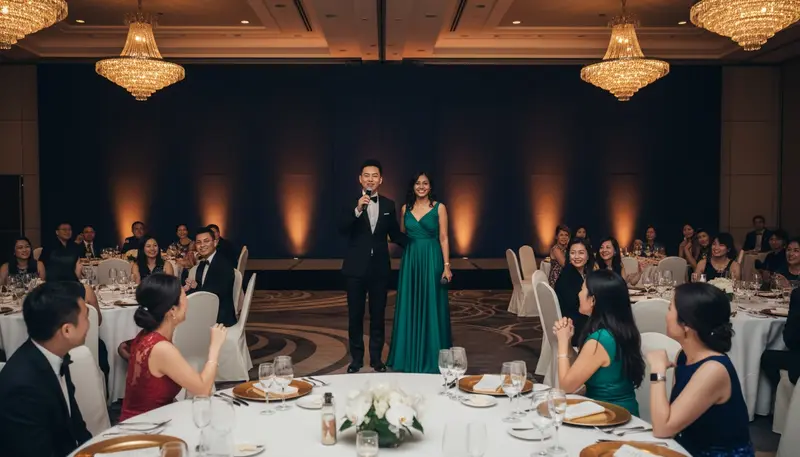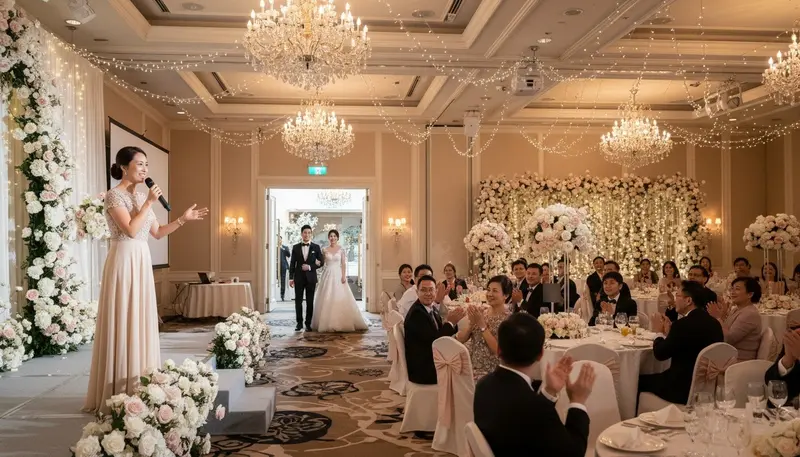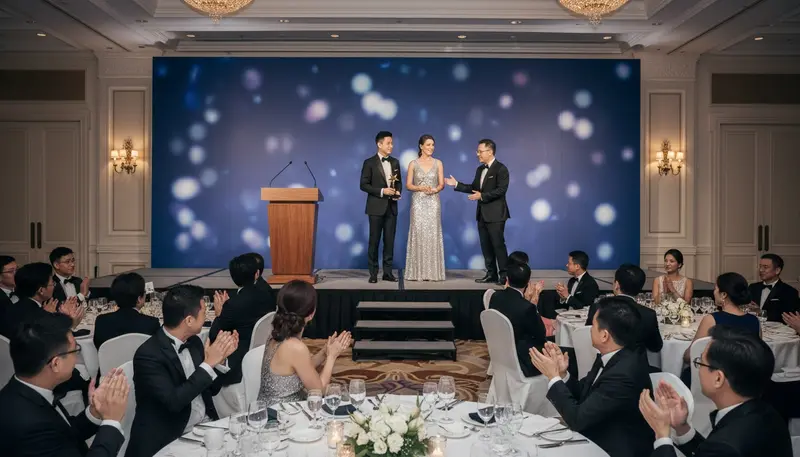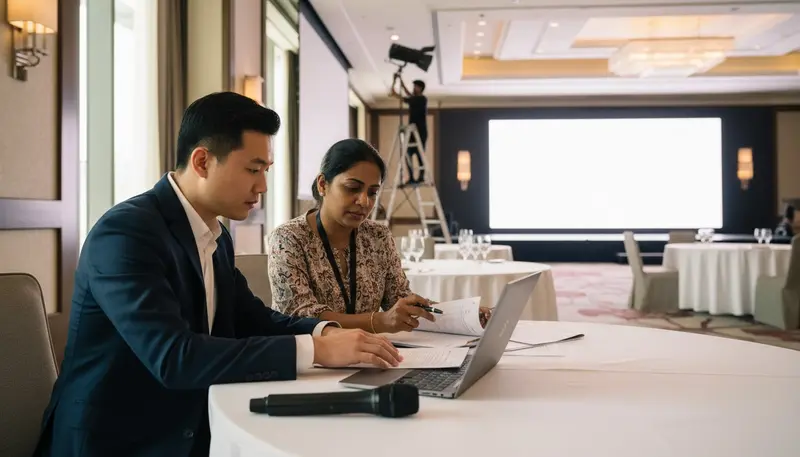
To brief an emcee well, send a written run sheet with timings, the names and titles of everyone the emcee will introduce, and the cues for every video, act and handover, early enough for one rehearsal. That is most of what separates a smooth event from one that runs an hour late. This guide shows what to send, when, and how to rehearse.
Price: a proper emcee fee in Singapore, usually SGD 800 to 3,500 per event, already covers a planning call, the script and one rehearsal. See emcee rates in Singapore.
What goes in the run sheet
- Times for every segment. Doors, seating, welcome, each speech, each course, awards, acts, games, lucky draw, dancing and the close.
- Who speaks, in what order. Full names, titles, company names and how to pronounce them.
- Cues. Every video, walk up music, lighting change and microphone handover, and who calls each one.
- The venue's limits. The dinner service timing from the banquet team and the sound curfew, often about 11pm in hotel ballrooms.
- Sensitive items. VIPs, sponsor mentions with exact wording, segments that must stay short and anything not to say.
- Languages. Which parts run in which language, if your emcee is bilingual.
What goes in the script
Your emcee writes the opening, the links between segments, the introductions and the close from your run sheet. You review the draft and send changes once. For a wedding, add how the couple wants to be introduced and any cultural rites such as the tea ceremony, door games or, for a Malay wedding, the doa and the kompang procession. For a corporate event, add key messages and the words your company uses. Keep the script in one shared file so the emcee, the AV team and the banquet team see the same version.
When to send what
| When | What to do |
|---|---|
| 6 to 8 weeks before | Confirm date, venue, headcount, budget and languages. Ask for a shortlist |
| 4 to 6 weeks before | Book the emcee, pay the deposit, share the first run sheet |
| 2 weeks before | Final script, speech order, award list, VIP names and titles |
| 5 to 10 days before | Script review call, check every name again |
| 1 week before | Confirm arrival time, dress code and microphones with the venue |
| 2 to 3 days before | Phone rehearsal, or a venue walkthrough for a big launch |
| Event day | Emcee arrives early for the sound check and a briefing with the AV and banquet teams |
How to rehearse
A 20 minute phone run through two or three days before is enough for most events. Go through the order, read the hard names aloud and agree the cues. For a product launch, rehearse with the real presenter. For an award night, walk through the first few awards so the rhythm is set. On the day, make sure the emcee meets the sound engineer: most on stage stumbles come from a missed microphone handover or a video cue nobody mentioned.
Timing tips
- Build 10 to 15 minutes of float into any evening with speeches. Speeches always run long.
- A plated dinner for a few hundred guests takes about 90 minutes. Plan the awards and lucky draw between courses, not against them.
- For 300 guests or more, choose table games or a screen quiz instead of games that need a queue at the stage.
- For 800 guests or more, plan two emcees in shifts, or one bilingual emcee with a stage manager.
The two most expensive mistakes
The first is booking the cheapest emcee and skipping the rehearsal. The second is sending no written run sheet until the week of the event. Both show up on stage as hesitations, wrong names and a lucky draw cut short by the curfew, and neither can be fixed once the event starts.
Ready to brief an emcee? Send your draft programme through the quote form, or read about the dinner and dance emcee and wedding emcee pages first.