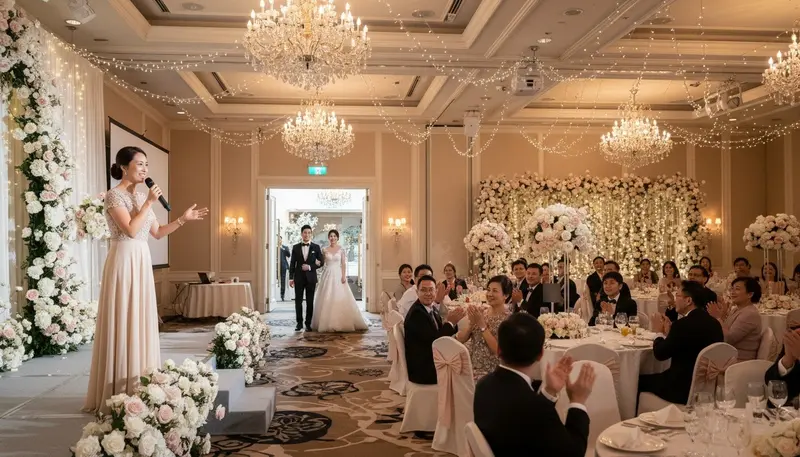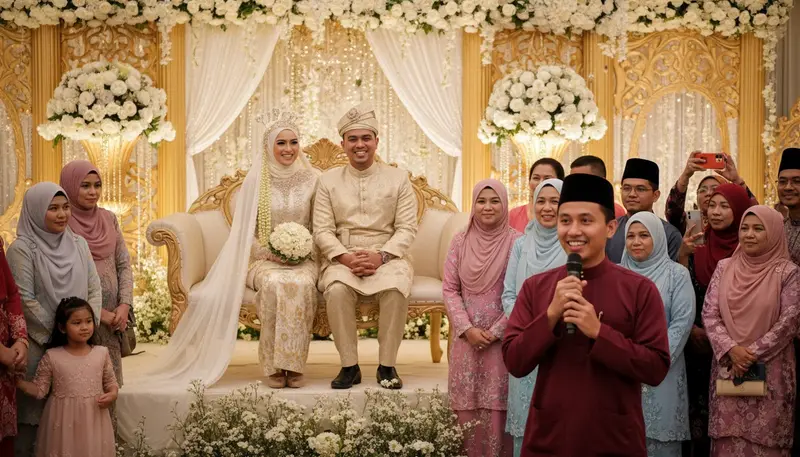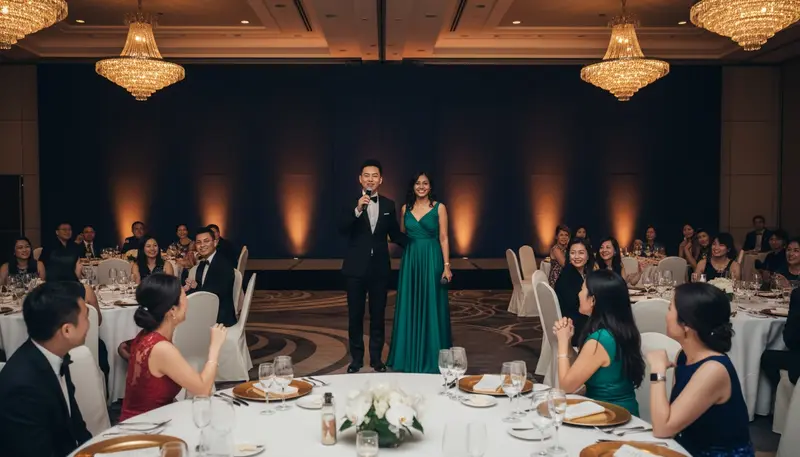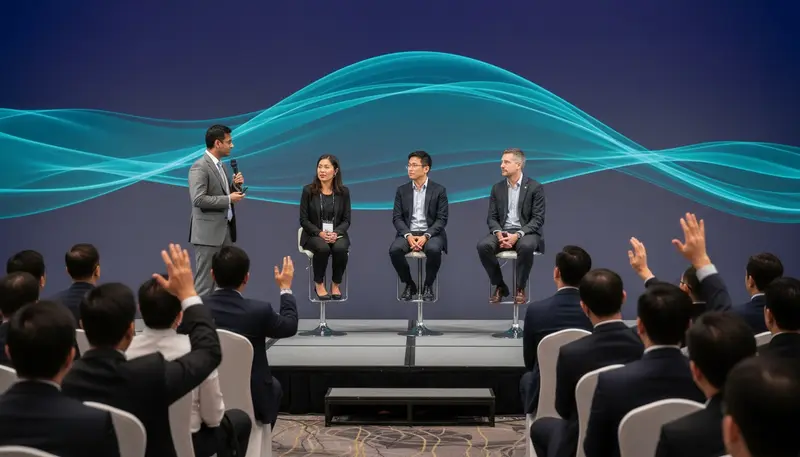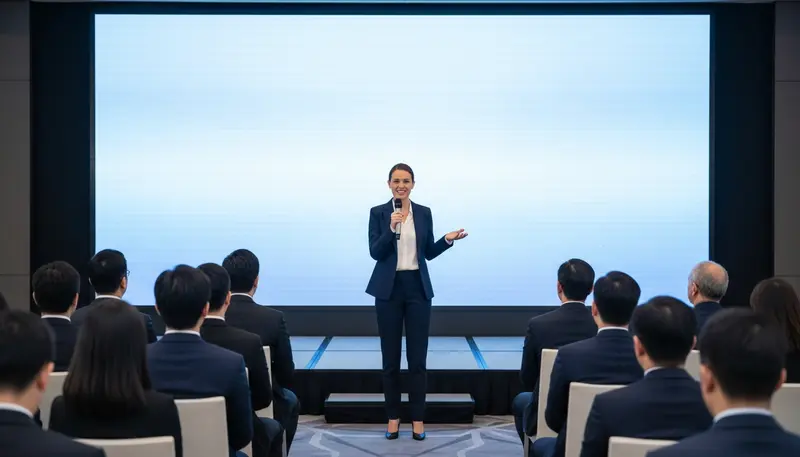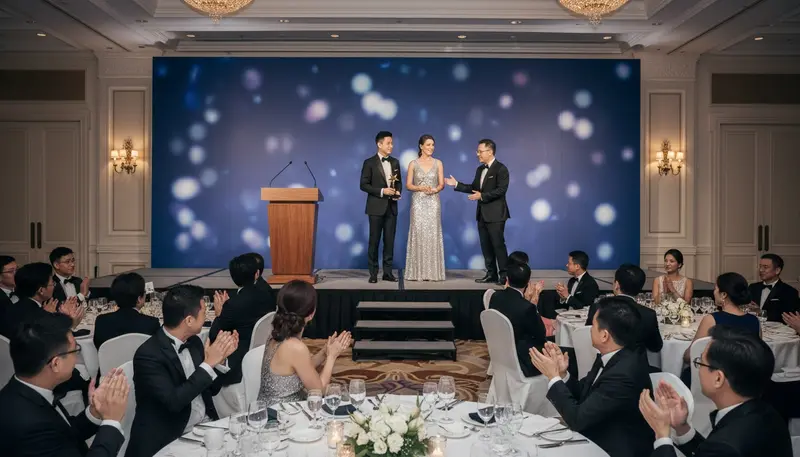
A bilingual emcee in Singapore hosts in English and a second language, usually Mandarin, Malay or Tamil, and switches between them without making the evening feel like a translation. Most rooms here are mixed, so for weddings, company dinners and community events a bilingual host is often the safe default. We match the emcee to the real language mix of your guests and check that the host is fluent, not just conversational.
Price: bilingual hosting costs somewhat more than English only. For a wedding, adding Mandarin usually adds SGD 200 to 500 to the base rate. Most events book an emcee for SGD 800 to 3,500. See emcee rates in Singapore.
Languages and when they matter
- English and Mandarin. The most requested pair for Chinese banquets, company dinner and dance nights, Chinese New Year dinners and trade shows with regional buyers.
- English and Malay. Malay weddings, community and grassroots events, and Hari Raya celebrations. See the Malay wedding emcee page.
- English and Tamil or Hindi. Indian weddings, sangeet and mehndi nights, Deepavali events and corporate functions with Indian guests. Indian MCs also introduce keynote speakers and run Q&A.
- Hokkien or Cantonese. Older relatives at a wedding, or older staff and line workers at a company dinner, often follow a dialect better than English read from a cue card.
- Japanese or Korean. Available on request for some corporate events.
How to check fluency
Conversational fluency and formal hosting are not the same skill. Delivering a formal welcome with the right honorifics in Mandarin is harder than chatting in it. Ask each emcee whether they have hosted formal segments in that language before, and have a short call with the shortlisted host to hear how they sound live rather than on a demo reel.
Plan the split before you book
Decide how much of the programme runs in each language. A Malay wedding with many elders may run mostly in Malay, while a wedding full of colleagues may flip that. At a company dinner, speeches may stay in English while games and the lucky draw switch languages to keep every table involved. Tell us the split when you ask for a quote. Adding a language after you confirm usually raises the price.
For very large events of 800 guests or more, plan two emcees working in shifts, or one bilingual emcee supported by a stage manager.
Book early
Strong bilingual emcees are a smaller pool, so they go first, especially for Saturday weddings in the peak season, December dinner and dance nights and the weeks around Chinese New Year. Send your date and language mix through the quote form. For the full booking timeline, see the run sheet and script guide.