Prices checked on
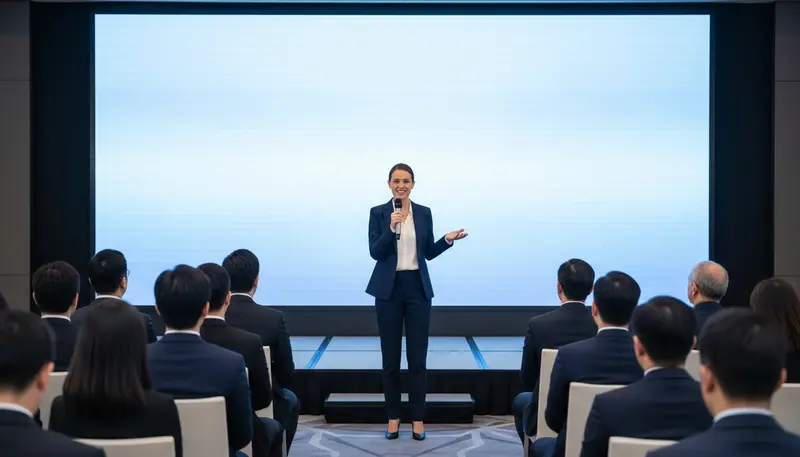
A conference or seminar emcee in Singapore usually costs SGD 1,500 to 3,500 for 3 to 4 hours. The host opens the day, introduces each speaker, links the sessions, runs panels and Q&A, and keeps the programme on time. Send the date, venue and speaker list. You get two or three conference hosts with reels and a price, usually within a working day.
- Typical fee: SGD 1,500 to 3,500 for 3 to 4 hours, checked November 2026
- Full day: quoted by the hour, so give the start and end times
- Lead time: four to eight weeks
- Needs from you: run sheet, speaker bios, pronunciation notes
- Languages: English, with Mandarin on request
Price: a conference emcee usually costs SGD 1,500 to 3,500, more for bilingual hosting or panel moderation. See emcee price in Singapore.
How much does a conference emcee cost in Singapore?
Most bookings fall between SGD 1,500 and SGD 3,500 for 3 to 4 hours. The price depends on the date, the length, the number of hosts, the languages and how much moderation the brief needs. This is a typical market range, checked in November 2026.
| Conference format | Usual length | One emcee (SGD) |
|---|---|---|
| Corporate conference or seminar | 3 to 4 hours | 1,500 to 3,500 |
| Ministry or stat board seminar | half day, 3 to 4 hours | 1,000 to 1,800 |
| Bilingual seminar, English with Mandarin or Malay | half day | 1,400 to 2,200 |
| Formal conference with panel moderation | full day | 1,800 to 2,800 |
| Exhibition main stage host | full day, up to 8 hours | 1,000 to 1,800 |
Panel moderation and bilingual hosting sit toward the top of each range. Protocol for a ministry or statutory board programme is covered on the stat board emcee page. Most conference hosts quote a flat rate for a defined block and charge overtime on top, so confirm the overtime rate before the day.
What does a conference emcee do on the day?
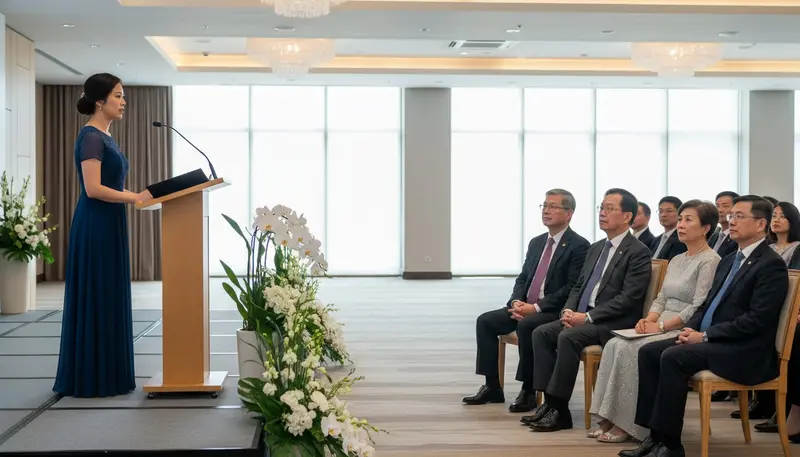
A one day conference in a hotel or convention centre usually runs like this.
| Time | Segment | What the emcee does |
|---|---|---|
| 8.00am | Sound check | Tests microphones, walks the stage, meets the AV crew |
| 9.00am | Opening | House rules, welcome, introduces the guest of honour |
| 9.15am to 10.30am | Keynotes | Introduces each speaker, thanks them, links to the next |
| 10.30am | Tea break | Announces the break and the exact return time |
| 11.00am to 12.30pm | Panel | Moderates, shares time between panelists, takes floor questions |
| 2.00pm to 4.30pm | Breakouts and plenary | Reopens the room, recaps the morning, keeps sessions to time |
| 4.30pm | Close | Thanks speakers and sponsors, gives the closing notes |
The clock is the hard part. If the 9.15am speaker runs 10 minutes over, the emcee cuts the next introduction short, drops one question from the Q&A or moves the break, so lunch still starts on time.
Seminar emcee
A seminar is shorter than a conference and usually has one speaker track, so one host is enough. The emcee opens, introduces each speaker, keeps the Q&A moving and thanks everyone at the end. Statutory board and ministry seminars also need correct forms of address and a script cleared in advance. See the government agency emcee page for protocol.
A half day seminar of three to four hours usually runs like this:
| Time | Segment | What the seminar emcee does |
|---|---|---|
| 30 minutes before | Registration | Sound check, checks names with the organiser |
| Start | Welcome | Housekeeping, opens the seminar, introduces the first speaker |
| First hour | Talks | Short links between speakers, holds the time |
| Break, 15 to 20 minutes | Tea | Calls the room back on time |
| Second half | Talks or a panel | Runs the panel or the Q&A |
| Last 10 minutes | Close | Thanks the speakers, gives the survey or next steps |
The links are short, often under a minute. Most of the work is before the day: speaker titles, slide order and who passes the microphone during Q&A.
Panel moderator
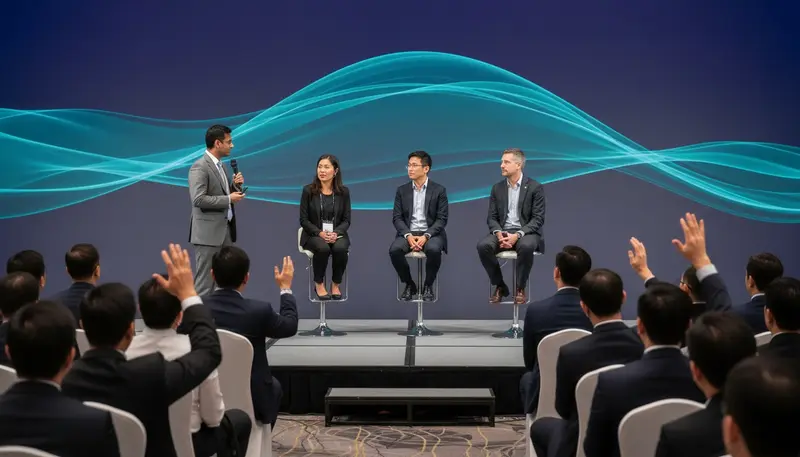
Moderating is a separate skill. The moderator introduces the panelists, asks the opening questions, makes sure one speaker does not take all the time, cuts off sales pitches, takes questions from the floor and ends on time. Plenty of good scripted hosts have never done it. Ask for a clip of the emcee moderating, and send the panelists' names, titles and the questions you want covered at least five days before. For a 45 minute panel with four speakers, plan about 30 minutes of discussion and 15 minutes of floor questions.
Hybrid and online conferences
At a hybrid conference the host talks to the room and to the camera. The emcee reads out online questions with the name of the person who asked, and keeps talking if the stream drops. Tell us the platform, who moderates the chat and where the camera sits, so the host knows where to look.
Conference emcee or corporate event emcee?
A conference runs on a speaker programme: sessions, panels, breaks and Q&A. A company celebration runs on a social programme: speeches, awards, games and entertainment. If your event is a launch, a company anniversary or a family day, see the emcee for corporate events page. For a student conference or youth forum, see school and youth emcee. If it is a booth or a mall roadshow, see the trade show emcee page.
Who runs the Q&A?
Decide this before the day: who collects questions from the floor or the app, who passes the microphone, and who closes each session. At most conferences the emcee does all of it. If you want a panel moderator who pushes the speakers, say so in the brief, because moderating is a different job from linking sessions.
What to send your conference host
- The full run sheet with timings, at least five days ahead.
- Speaker and panelist names, titles, short bios and pronunciation.
- The panel questions and any topics to avoid.
- Sponsor names and the exact wording for each mention.
- Every video and slide cue, and who calls them.
- The language split, if you need a bilingual emcee.
Ask the emcee to meet your AV team during the sound check. Slides that nobody cued and a speaker with no live microphone cause more trouble on the day than the script does.
How far ahead to book
Book four to eight weeks ahead, and earlier for December and the weeks around Chinese New Year, when senior hosts are booked out. For events that mix a public sector guest of honour with a commercial programme, also read the formal event emcee page. To get a shortlist, use the quote form. The run sheet and script guide shows how to prepare.