Prices checked on
An emcee for corporate events in Singapore usually costs SGD 1,500 to 3,500 for 2 to 4 hours. The corporate event emcee runs the spoken programme at a company event: the welcome, the speeches, the videos, any awards and the close. Send your date, venue, headcount and languages, and you get two or three matched emcees with reels and a price, usually within a working day.
- Typical fee: SGD 1,500 to 3,500 for one emcee, checked November 2026
- Length: 2 to 4 hours, overtime charged by the hour
- Lead time: four to eight weeks
- Languages: English, with Mandarin, Malay or Tamil on request
- Included: planning call, run sheet, rehearsal and early arrival for sound check
Price: a corporate emcee usually costs SGD 1,500 to 3,500 for a 2 to 4 hour programme, more for bilingual hosting or a heavy script. See emcee price in Singapore.
How much does a corporate event emcee cost in Singapore?
Most bookings fall between SGD 1,500 and SGD 3,500 for 2 to 4 hours. The price depends on the date, the length, the number of emcees, the languages and your brief. This is a typical market range, checked in November 2026.
| Corporate event | Usual length | One emcee (SGD) |
|---|---|---|
| Product launch or brand activation | 2 to 4 hours | 1,500 to 3,500 |
| Company anniversary or milestone event | 3 to 4 hours | 1,500 to 3,500 |
| Long service awards or recognition night | 3 to 4 hours | 2,000 to 3,500 |
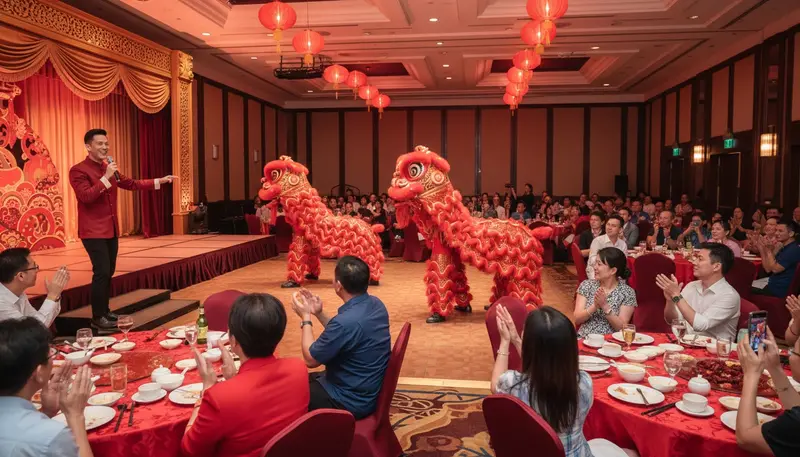
| Chinese New Year company event | 2 to 3 hours | 800 to 2,000 |
Most emcees quote a flat rate for a block of three to four hours, then charge overtime by the hour. Get the overtime rate in writing before the day. The year end company dinner has its own price tiers on the annual dinner emcee page.
What to check in a corporate emcee quote
Put the quotes side by side. Look at the hours covered, the rehearsal, the overtime rate, the languages and any travel or parking cost. Ask if the fee includes GST. GST is 9% in Singapore, and an emcee who is GST registered adds it on top of the quote. Ask what happens to the deposit if your date moves. Keep every answer in writing.
What does an emcee do at a corporate event?
Your emcee opens the event, welcomes the guest of honour and the senior team by their correct titles, introduces each speaker, links the videos and presentations, runs any awards or recognition segment, keeps the programme to time and closes with the thank yous. If a speaker runs over, the emcee shortens the next link. If the run sheet changes that afternoon, an experienced host adjusts without needing to be told twice.
Senior managers and investors in the room remember a name said wrong, a programme that slips by half an hour and a clumsy move into Q&A. A good corporate host prepares for these before the doors open.
Which company events need an emcee?
- Product launches and brand activations. Short, sharp and filmed. See the section below.
- Company anniversaries. A 10th or 25th year event with a CEO speech, a history video and long service awards.
- Family days. Games for staff and their children, often outdoors. Pair your host with a kids emcee for the children's corner.
- Staff celebrations and year end parties. A lighter programme with a gift exchange or lucky draw. See year end party emcee.
- Annual dinners. Awards, games and the lucky draw have their own page: annual dinner emcee.
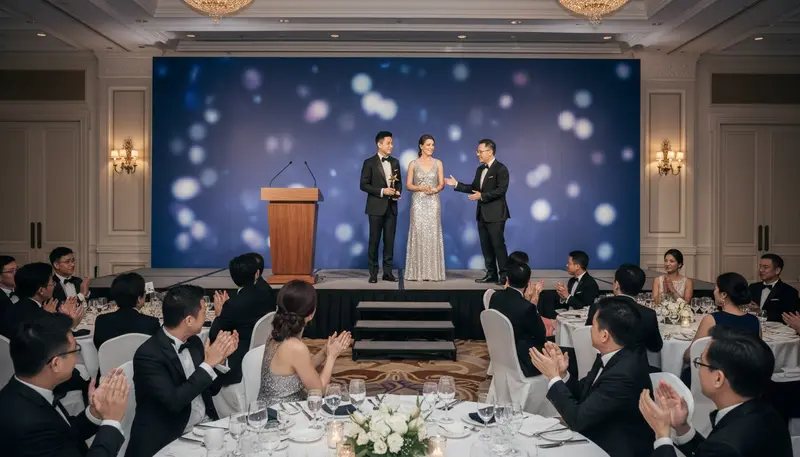
- Award ceremonies. Long winner lists and formal pacing. See awards emcee.
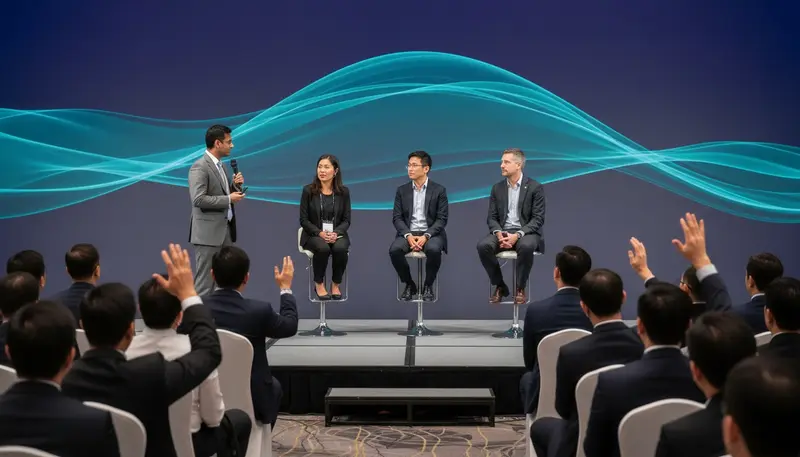
- Conferences and seminars. Speaker links, panels and Q&A. See conference emcee.
- AGMs and town halls. A fixed agenda and questions from the floor. See formal emcee.
- Statutory board events. Protocol and forms of address. See stat board emcee.
- Trade shows. Booth pitches and lead games. See trade show emcee.
Product launches and brand activations
A launch is short and has to look good on camera. The room needs something visual in the first 15 minutes, and the reveal itself should stay under 10 minutes so the press get a clean shot. Your host learns the product's key messages, runs the countdown and hands over to your presenter at the exact moment the lights and video change. That is why a 90 minute launch can cost as much as a four hour dinner.
Brief the emcee at least a week ahead with the real run sheet. Rehearse with the real presenter, not a stand in, and agree who calls each lighting and video cue.
One emcee or two?
One emcee covers most corporate programmes, from a 60 guest launch to a full hotel ballroom. Book a male and female pair when the evening runs past three hours with long award lists, or when you want one host per language. Book a separate games host for a family day or a dinner of 300 guests or more, so your main emcee stays on the programme while someone else runs the floor.
What the emcee needs at the venue
- Two wireless handheld microphones, one for the emcee and one spare.
- A lectern if speakers read from notes, and a confidence monitor or printed run sheet at the side of the stage.
- A seat near the stage steps with a clear line to the AV desk.
- Arrival 30 to 60 minutes before the start for a sound check and a briefing with the AV and banquet staff.
Most on stage stumbles come from a missed microphone handover or a video cue nobody told the emcee about. Ask your emcee to meet the sound and video crew during the sound check.
Languages
Many corporate rooms need English with Mandarin, Malay or Tamil. A bilingual emcee costs a little more because fewer hosts can run formal segments in two languages. Ask whether the host has hosted a corporate programme in the second language before, not only spoken it.
How far ahead to book
Book four to eight weeks ahead. December and the weeks around Chinese New Year fill first, so book those dates two to three months out. Send the full run sheet at least five days before the event, with speaker names, pronunciation, titles, sponsor wording and any segment that must stay tight.
The mistake to avoid
Do not book the cheapest quote and skip the rehearsal. A 20 minute phone run through two or three days before costs nothing extra with most emcees and removes most of the risk. The run sheet and script guide shows what to prepare. To get a shortlist, use the quote form.